1. Fast Hybrid Rice vs. Ancient Heirloom Red Rice: The Agronomic Secret
The single most common mistake travelers make when planning a trip to Bali's rice terraces is assuming that all valleys follow the same schedule. In reality, Bali operates on two fundamentally distinct agricultural systems:
The Gianyar / Tegallalang Cycle (Fast Hybrid)
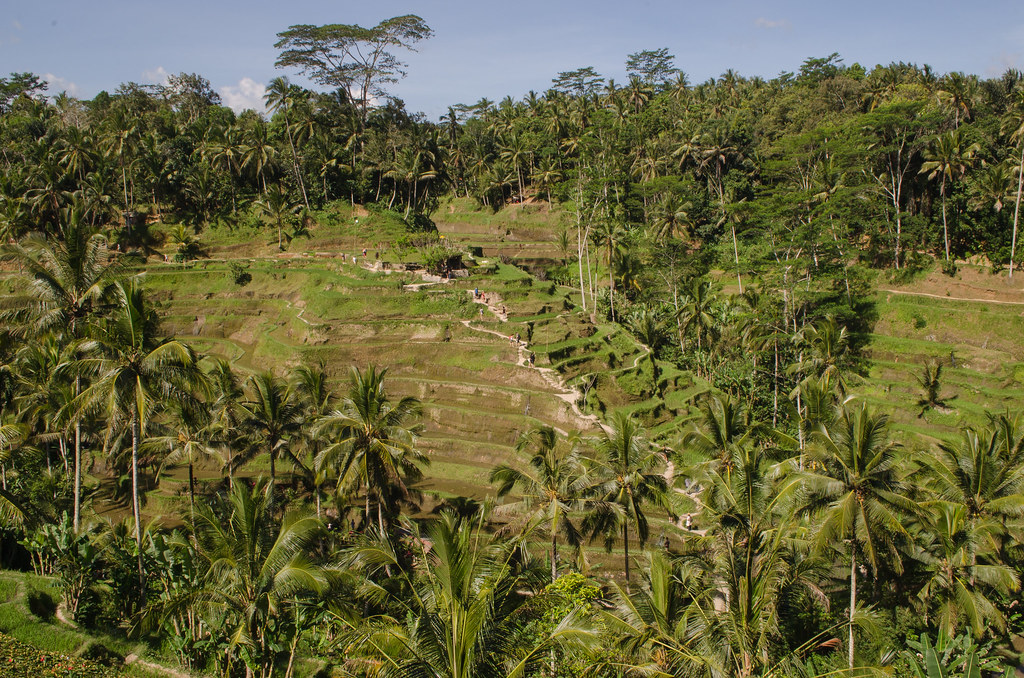
In lowland and peri-urban valleys like Tegallalang and Ubud Kajeng, farmers cultivate fast-growing government hybrid white rice (Padi Unggul) with a maturation cycle of just 105 to 115 days.
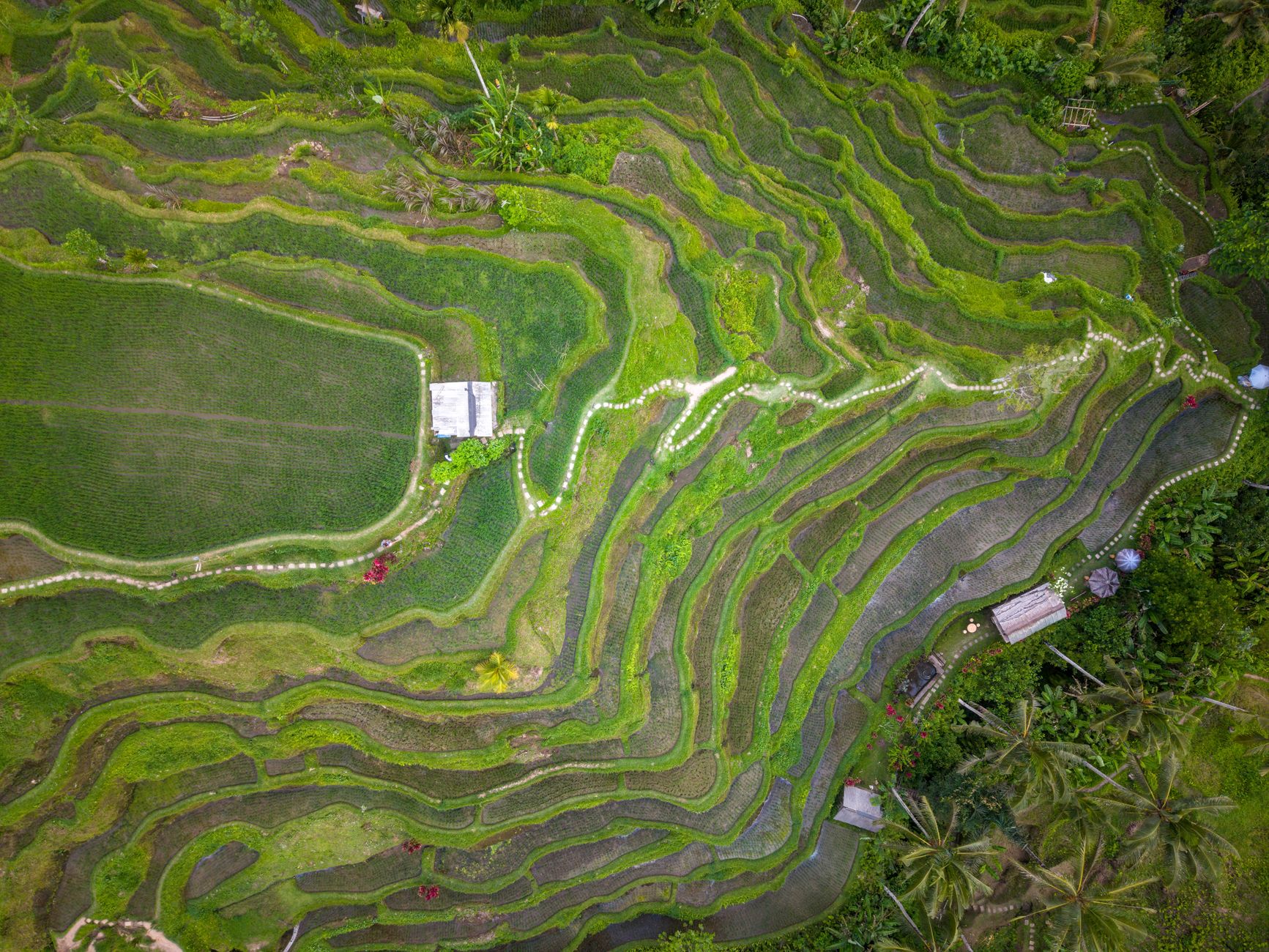
Because individual farmers stagger planting within adjacent subak wards, you will almost always find green paddies at Tegallalang year-round. While one tier is being flooded or ploughed, an adjacent tier is already luxuriant emerald green.
The Tabanan / Jatiluwih Cycle (Heirloom Red Rice)
At DTW Jatiluwih, UNESCO regulations strictly mandate the cultivation of traditional, slow-growing heirloom Balinese red rice (Beras Merah Pari Temon), which requires a full 6-month single annual cycle.
Seedlings are planted in December and January; they reach shoulder-height emerald green in March–April, turn magnificent golden amber in May, and are harvested in June. If you arrive in late July or August, the entire 600 hectares will be dry stubble!
2. Debunking the Myth: 'When is the Worst Time to Go to Bali?'
One of the most frequently asked questions on travel forums is: "When is the worst time to visit Bali?" Mainstream guidebooks uniformly answer: "Avoid the wet season from December to February." For rice terrace enthusiasts, this advice is completely misleading.
Here is the ground-truth breakdown of what actually happens during the wet season versus the dry season:
Why the 'Wet Season' is Actually Spectacular for Rice Terraces
- The Sky-Mirror Effect: In December and January, fields are flooded with clean mountain runoff. The water surfaces transform hundreds of descending tiers into giant glass mirrors, reflecting early morning purple and gold skies, palm silhouettes, and volcanic cones.
- Predictable Morning Sun: In tropical Bali, monsoon rain does not fall in continuous 24-hour drizzle. Between 06:00 AM and 11:30 AM, skies are almost always clear, sunny, and calm. Convective tropical downpours usually hit between 13:30 and 16:00 and pass within 45 to 90 minutes.
- Zero Crowds: You can walk the trails of Jatiluwih or Kajeng in complete solitude without tour buses or selfie sticks.
- Vibrant Jungle Greenery: Surrounding jungle canopies and mossy canyon stone walls explode with life, and nearby waterfalls flow at maximum volume.
The Real Worst Time: Late July & August in Single-Crop Regions
If your dream is to gaze out over boundless seas of vibrant green terraces, late July through August can be intensely disappointing at Jatiluwih:
- The heirloom red rice harvest was completed in June, leaving fields dry, cut, and brown.
- Farmers burn residual straw stubble in the evenings, creating localized haze and smoke in mountain valleys.
- This coincides exactly with peak European and Australian school holiday vacations, causing severe road congestion along Jalan Raya Tegallalang (up to 2-hour delays from Ubud).
- Accommodation rates and private driver hire surge by 30% to 50% across southern and central Bali.
3. Hourly Lighting Blueprint for Photographers
Because Bali lies just 8 degrees south of the equator, the sun rises rapidly and intensely. Lighting conditions undergo dramatic transformations within 30-minute intervals. Follow this field-tested lighting schedule:
| Time Window | Lighting Characteristic | Atmospheric Phenomenon | Optimal Shooting Strategy |
|---|---|---|---|
| 05:45 – 06:30 AM | Blue Hour / Dawn | Soft violet, pink, and pastel orange gradient skies. Perfect mirror water reflections. | Bukit Cinta (Mount Agung reflection) and Jatiluwih. Use a tripod and long exposure (1/4s to 2s). |
| 06:30 – 07:45 AM | Golden Hour & Crepuscular Rays | Low-angle warm sunlight pierces morning mist trapped in valleys, producing intense god rays (Tyndall effect). | Tegallalang eastern ridge shooting westward into the ravine. Position palm fronds between lens and sun. |
| 07:45 – 10:00 AM | Clean High-Contrast Morning Light | Saturated emerald green foliage against deep blue skies before convective heat haze forms. | Jatiluwih walking loops and drone aerial photography. Circular polarizers (CPL) eliminate water glare. |
| 10:30 AM – 03:30 PM | Harsh Overhead Equatorial Sun | Washed-out colors, severe top-down shadows under palm fronds, high heat and humidity (30°C+). | Avoid outdoor landscape photography. Head to cliffside cafes for lunch or visit shaded jungle waterfalls. |
| 04:30 – 06:00 PM | Late Afternoon Golden Sidelight | Warm, gentle golden light bathing west-facing terraces. Comfortable walking temperatures. | Campuhan Ridge Walk, Ubud Kajeng trail, or sunset drinks along Jatiluwih panoramic restaurant ridge. |
4. Regional Microclimates Across Bali's Highlands
Bali's steep volcanic backbone creates pronounced altitudinal microclimates. What you experience in coastal Seminyak has little bearing on conditions 1,000 meters up in the mountains:
| Region | Elevation | Morning Temp | Annual Rain | Key Meteorological Trait |
|---|---|---|---|---|
| Ubud Central / Kajeng | 200–250 m | 23°C – 26°C | 2,200 mm | Tropical humid. Sheltered river ravines; warm and calm early mornings. |
| Tegallalang (Ceking) | 550–600 m | 21°C – 24°C | 2,600 mm | Morning canyon fog that burns off by 07:30 AM. High midday heat index in valley floor. |
| Jatiluwih (Batukaru) | 700–850 m | 18°C – 22°C | 3,200 mm | Cool highland air. Mount Batukaru attracts afternoon cloud buildup almost daily by 13:00. |
| Sidemen Valley | 400–500 m | 20°C – 24°C | 2,400 mm | Clear mornings under Mount Agung's shadow. Refreshing river breezes along Unda basin. |
| Munduk Ridges | 1,000–1,200 m | 15°C – 19°C | 3,400 mm | True alpine climate. Crisp, chilly nights (14°C); rolling cloud banks and perpetual mist. |
5. Seasonal Packing & Field Essentials
Packing appropriately ensures you spend your time enjoying the vistas rather than nursing twisted ankles or ruined electronics:
- Footwear with Aggressive Tread: Never attempt to hike down into Tegallalang or Jatiluwih in smooth flip-flops or leather fashion sandals. Wet mud bunds (pematang) and algae-slick stone steps require trail running shoes with deep rubber lugs or rugged hiking sandals with secure heel straps (Teva, Chaco).
- Waterproof Dry Bag: If traveling between November and March, carry a lightweight 10L–20L roll-top dry bag. When a tropical monsoon shower begins, your camera bodies, lenses, and smartphones are completely shielded.
- Highland Layering for Munduk & Jatiluwih: At elevations above 800 meters, early morning scooter rides and dawn photo shoots can feel genuinely chilly (15°C to 18°C). Bring a lightweight packable windbreaker or fleece.
- Cash for Checkpoints & Donations: Rural ticket kiosks and bridge donation huts operate exclusively in cash (Indonesian Rupiah). Keep 10,000, 20,000, and 50,000 IDR banknotes in an easily accessible front pocket.