1. An Agrarian Oasis Hidden Behind Ubud's Hustle
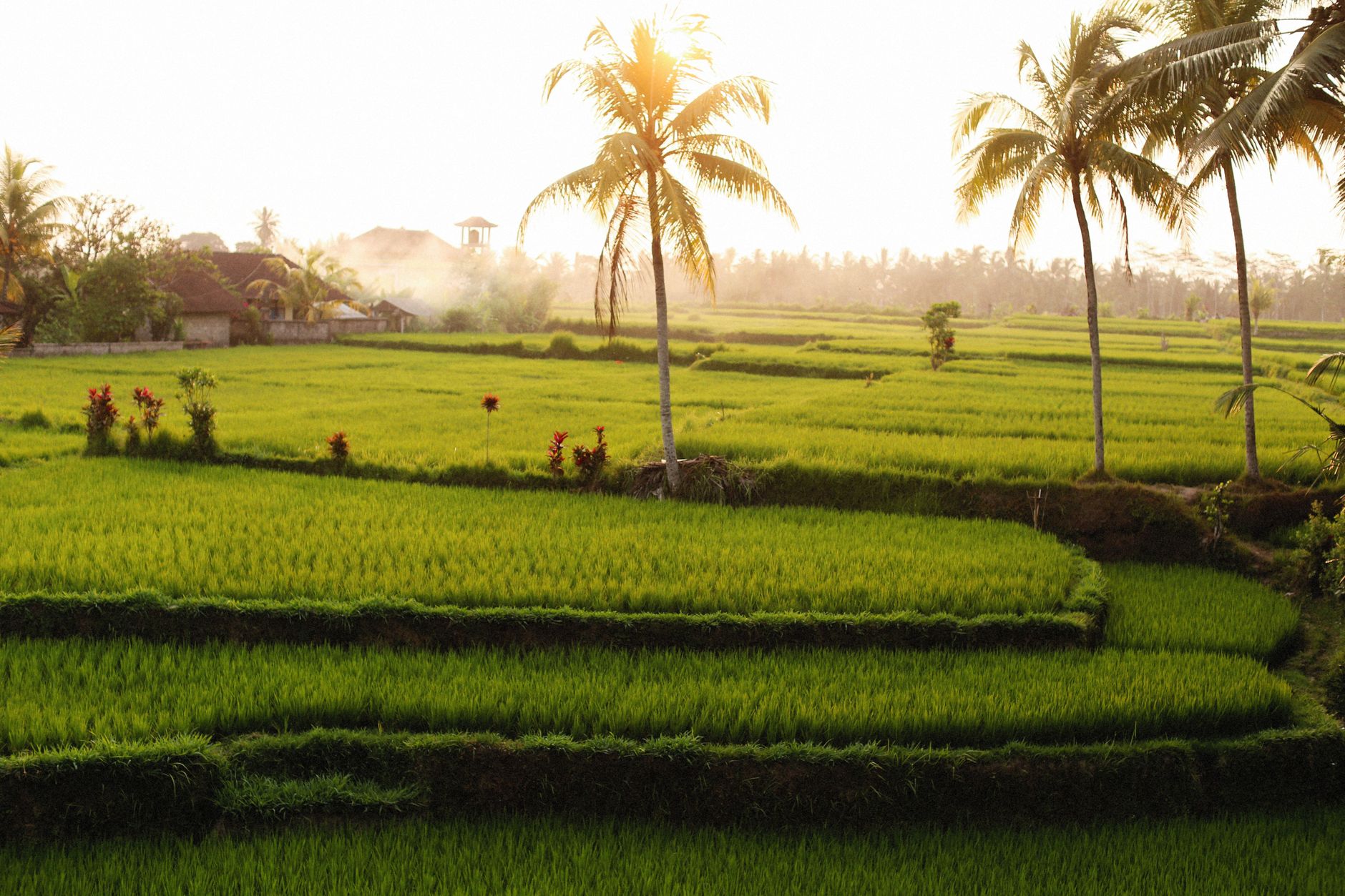
Just two minutes on foot north of the bustling intersection of Jalan Raya Ubud and the sacred Ubud Royal Palace (Puri Saren Agung), the frantic noise of scooters, taxis, and boutique shoppers evaporates completely into the peaceful tranquility of Subak Juwuk Manis and the Jalan Kajeng Rice Field Walk.
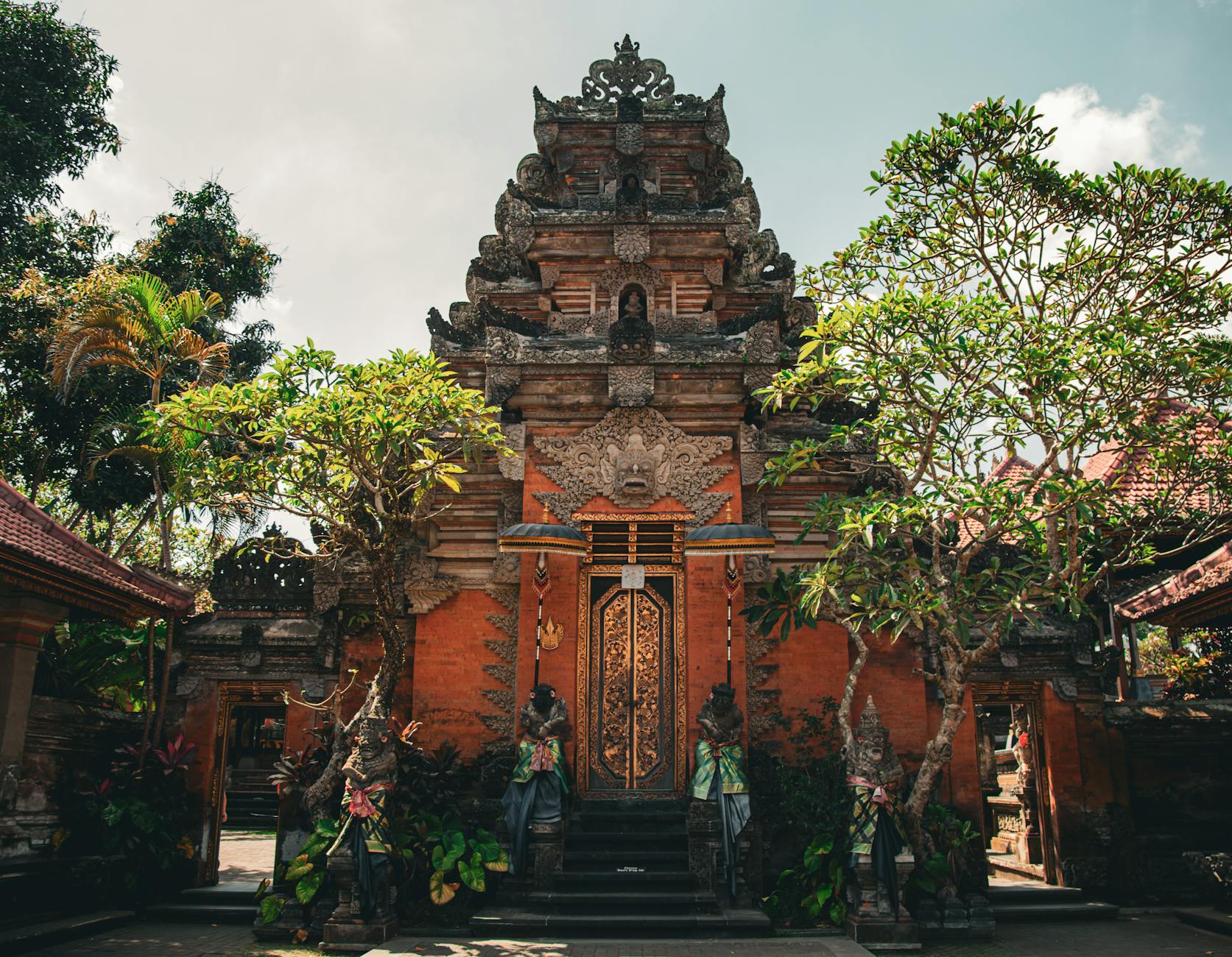
Unlike the steep, strenuous canyon descent required at Tegallalang or the 1.5-hour vehicle transfer to Jatiluwih, the Kajeng walk requires zero transport. You simply step off Ubud's main street and follow a quiet paved lane lined with Balinese family compound gates, frangipani blossoms, and stone guardian statues before emerging into wide-open, shimmering green rice paddies.
2. Step-by-Step Route Breakdown: The 3.5 km Loop
The Kajeng walk is structured as a circular loop that connects central Jalan Kajeng with the famous Sweet Orange trail and leads back down to Jalan Raya Ubud:
Jalan Kajeng Entrance & Carved Concrete Slabs
Turn north off Jalan Raya Ubud onto Jalan Kajeng. For the first 400 meters, you walk past local guest houses and warungs. Look down at your feet: the concrete walkway is embedded with hundreds of personalized cement pavers inscribed with traveler names, dates, quotes, and handprints from across the globe.
Emergence into Subak Juwuk Manis Fields
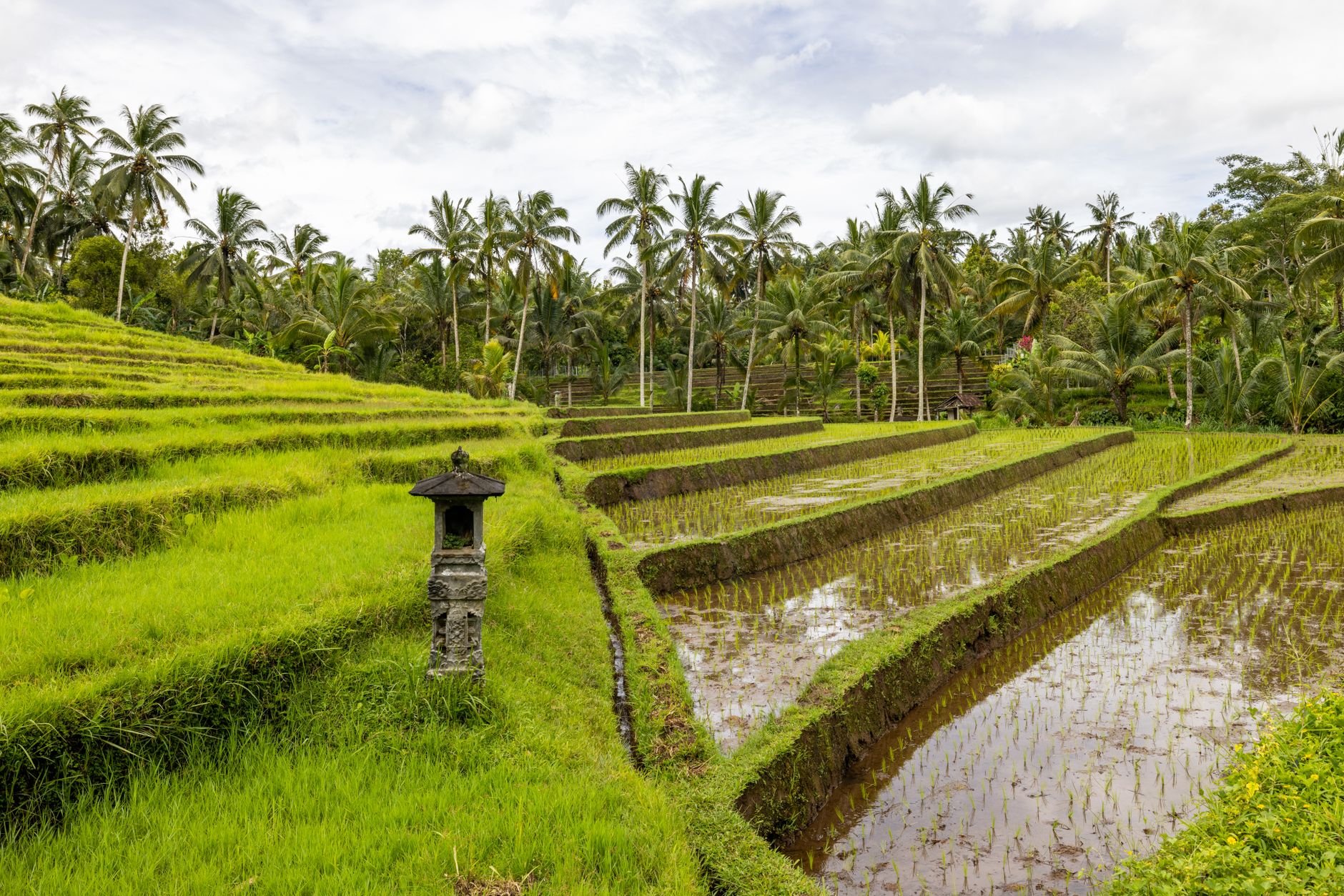
The houses end abruptly, and the path opens into active, sweeping rice paddies. A sign announces the pedestrian-only zone. Walk along the flat concrete path bordered by flowing subak irrigation ditches and tall coconut palms swaying in the morning breeze.
Sweet Orange Warung & Organic Rest Stop
At the northern bend of the circuit, you reach the iconic Sweet Orange Warung. Colorful wooden art signs, hammocks strung between coconut trunks, and open-air beanbags invite you to sit for freshly pressed watermelon juice, cold young coconut water, or local Balinese coffee.
Western Trail Return to Jalan Raya Ubud
Follow the path south along the western ridge of the subak corridor. You will pass small artist studios, organic cafes, and duck flocks before emerging down a charming cobblestone alley directly opposite the Museum Puri Lukisan onto Jalan Raya Ubud.
3. Kajeng Rice Field Walk vs. Campuhan Ridge Walk
Visitors to Ubud frequently confuse these two iconic walks. While both are accessible on foot from downtown, they offer entirely different sensory experiences:
| Feature | Kajeng Rice Field Walk | Campuhan Ridge Walk |
|---|---|---|
| Landscape Type | Active rice paddies, subak flumes, working farms | Exposed grassy ridge between two river gorges |
| Shade & Foliage | Abundant coconut palms, banana trees, shaded warungs | Zero shade along the ridge; direct sun exposure |
| Pavement & Surface | Carved concrete slabs, narrow stone paths | Wide paved block promenade |
| Crowd Levels | Very quiet; mostly peaceful strollers & farmers | Heavily crowded with fitness walkers & tourists |
| Starting Point | Jalan Kajeng (150m from Ubud Palace) | Warung Gunung / IBAH Hotel driveway (west Ubud) |
4. Best Times to Walk & Photography Advice
Because the Kajeng walk is open and tranquil, timing your stroll elevates the experience from pleasant to unforgettable:
- Sunrise Stroll (06:30 – 08:00 AM): The finest window of the day. The air is cool (22°C), dragonflies dart over the water, and local farmers are actively tending irrigation gates. Soft golden morning light illuminates the dew on the rice stalks.
- Sunset Golden Hour (16:45 – 18:15 PM): Spectacular pink and amber hues reflect in the flooded paddies. The temperature cools down, and an evening breeze flows across the valley.
- Midday Warning (11:00 AM – 14:30 PM): Even though coconut palms provide occasional shade, midday tropical heat and humidity can be draining. If walking midday, carry an umbrella for sun protection and stay hydrated.
5. Field Realities & Etiquette on Agricultural Land
Field Etiquette for Ubud Kajeng
-
Respect the Mud Bunds (Pematang): Stay on the designated paved stone walkway. Do not trample the narrow mud retaining walls, as breaking these bunds damages the delicate gravity-fed water levels essential to the crops.
-
No Motorbikes or Drones: Motorbikes are strictly prohibited by the local banjar. Flying drones directly over farmers' private homes or working fields without permission is considered invasive and is discouraged.
-
Support Local Warungs: Because access to this agricultural paradise is 100% free, consider stopping at Sweet Orange Warung, Juwuk Manis Warung, or local coconut stands along the path to support the local agrarian families.